.jpg)
.jpg)
.jpg)
.jpg)
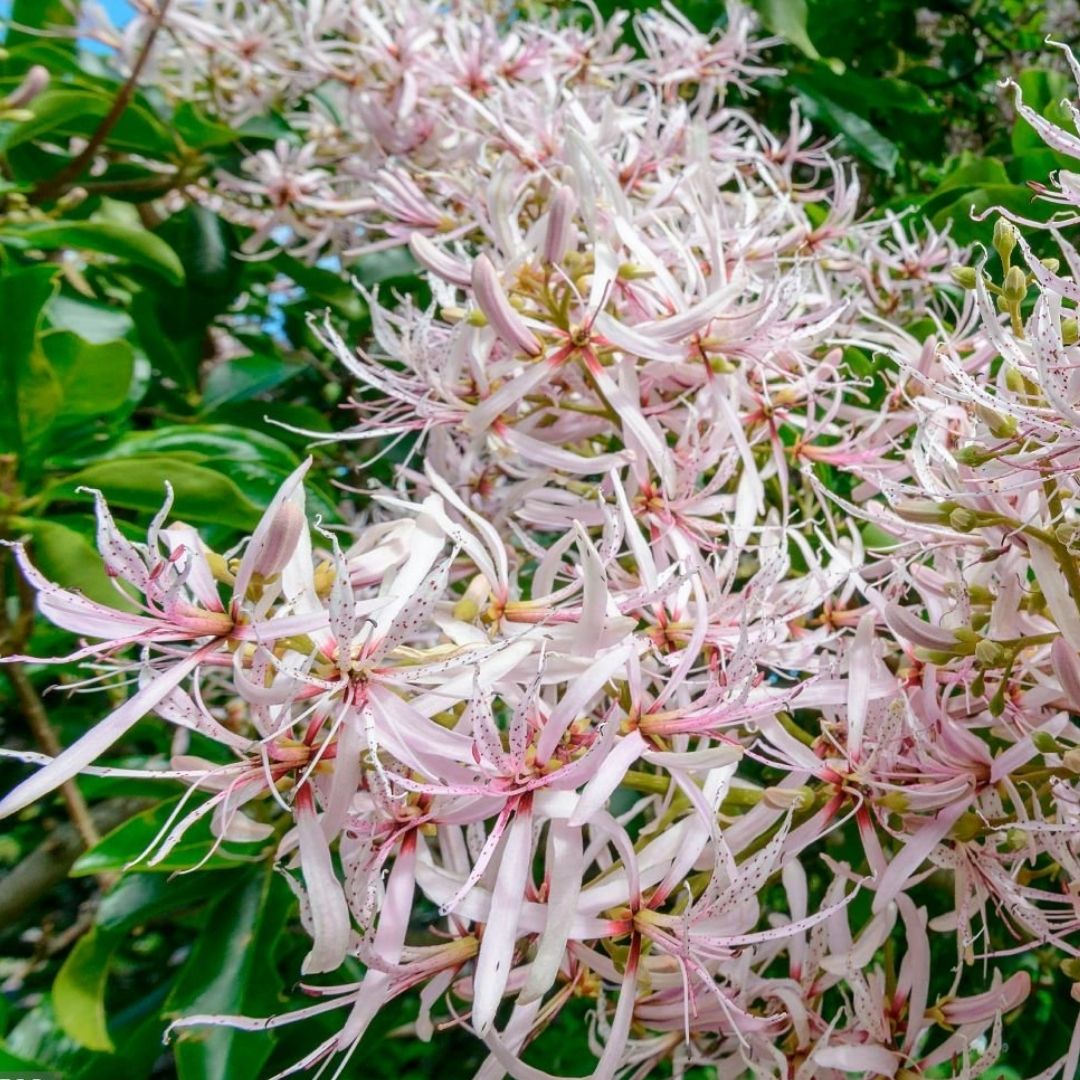
For most of the year, the Cape Chestnut is a handsome but unassuming presence — a rounded crown of glossy, dark green leaves. Then early summer arrives, and the whole tree seems to change its mind. Loose sprays of pink and white flowers smother the canopy almost overnight, filling the air with a light, sweet scent that draws butterflies in for a feed (and, in the process, a spot of pollination). By late summer, the flowers give way to knobbly, warty seed capsules — an odd, almost sculptural feature that birds and monkeys can't resist raiding for the oil-rich seeds inside.
It's this resemblance to the (unrelated) horse chestnut that gave the tree its English name, an early explorer, William Burchell, thought the flowers and fruit looked familiar, even though the two trees aren't botanical relatives. The genus name has its own story: the Swedish botanist Carl Peter Thunberg, sometimes called the father of South African botany, was so struck by the sight of the tree in flower at Grootvaderbosch in 1772 that he fired his gun at the branches to bring down a blooming twig, then named the genus Calodendrum, Greek for "beautiful tree."
In parts of Africa, the seeds have long been considered good luck, particularly among the Xhosa, who tied them to their wrists as charms said to bring skill and good fortune while hunting. The pale, easy-to-work timber has traditionally been prized for furniture, flooring and tool handles, while the seed oil, still used today in natural skincare under the name Yangu oil, has a reputation for soothing and protecting skin under the African sun.
Plant it in full sun to light shade, though flowering is heaviest in sun. Water generously through the first three or four years while the root system establishes, after which the tree becomes considerably more self-sufficient and rides out normal dry seasons. Prune lightly to shape a young leader and no more. Dig compost into clay before planting and avoid ground that stays wet, because deep, fertile, well-drained soil is what actually determines whether this tree thrives. Shelter young trees from strong wind and hard frost for their first few winters. Give it room, because this is not a courtyard tree: it wants space for a broad crown and a spreading root system, so keep it well clear of paving and walls. Use it as a shade tree, a specimen planting or the centrepiece of a large garden, park or avenue.
We plant Cape Chestnut at Mistbelt as a canopy species that pulls its weight ecologically once established, its capsules ripen in late summer, providing a valuable food source for the site's wildlife, including the troops of Samango monkeys that live in Hogsback's forest canopy. Moderate to fast-growing for a canopy tree, it adds structure to the developing forest more quickly than some of our slower climax species, helping the site build toward a genuinely layered, functioning ecosystem rather than a stand of trees.
A Tree Card funds real tree planting in one of Greenpop's restoration projects. Browse our full range of designs, for any occasion, and find the right one for you.