.jpg)
.jpg)
.jpg)
.jpg)
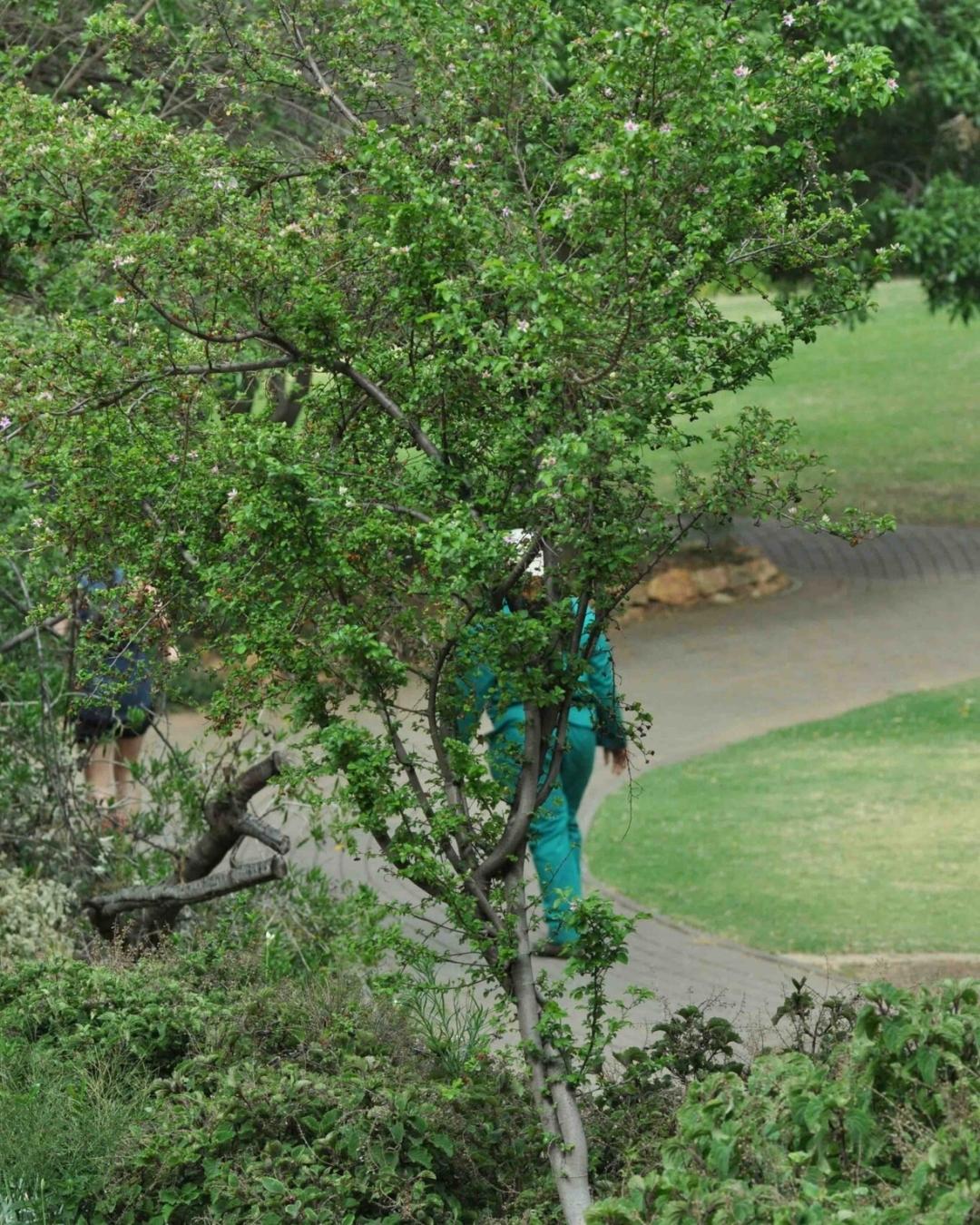
The flowers come first and they keep coming. Mauve-pink, five-petalled, arranged into a distinct star with a boss of yellow stamens at the centre, they appear through spring and well into summer rather than in one short burst. Few indigenous plants of this size flower for as long.
Then the fruit takes over. Each berry is glossy red-brown and divided into four fused lobes, so depending on the angle it reads as a square or a cross. That is where cross-berry and kruisbessie come from. They are edible in the way that a small, dry, faintly sweet mouthful is edible, and generations of children have eaten them anyway.
For its size it does a lot of ecological work. Bees and butterflies take the flowers, the foliage feeds the larvae of several butterfly and moth species, and mousebirds, bulbuls, barbets and starlings strip the berries. Kudu, bushbuck and duiker browse it hard and it grows straight back. The dense scrambling habit gives small birds somewhere to nest.
The bark yields a strong fibre that has long been twisted into rope and used for binding and weaving, and it lathers in water as a soap and shampoo. The wood is springy and was favoured for bows, spear shafts and fishing rods. Several parts of the plant appear in traditional medicine, particularly around childbirth.
Full sun gives the most flowers. It will take light shade and flower less. Water while young, then treat it as drought hardy.
Pruning is the key to using it well. Left alone you get a scrambling shrub. Cut it back annually and you get a tidy small tree, or train it flat against a wall as an espalier. Fast, cheap and forgiving, it is one of the best starting points for a first indigenous garden and one of the best wildlife or security hedges available.
We plant Cross-berry at our Mistbelt Habitat Restoration Project and the Garden Route Botanical Garden Forest Plot as a fast-growing, resilient addition to the understorey and forest margins, its tolerance for a wide range of soils and conditions makes it a reliable, low-maintenance choice across different site types. Its long flowering season and dense, scrambling habit bring sustained activity to a young forest, feeding bees and butterflies through spring and summer while giving small birds safe nesting cover well before the taller canopy species have matured.
A Tree Card funds real tree planting in one of Greenpop's restoration projects. Browse our full range of designs, for any occasion, and find the right one for you.