.jpg)
.jpg)
.jpg)
.jpg)
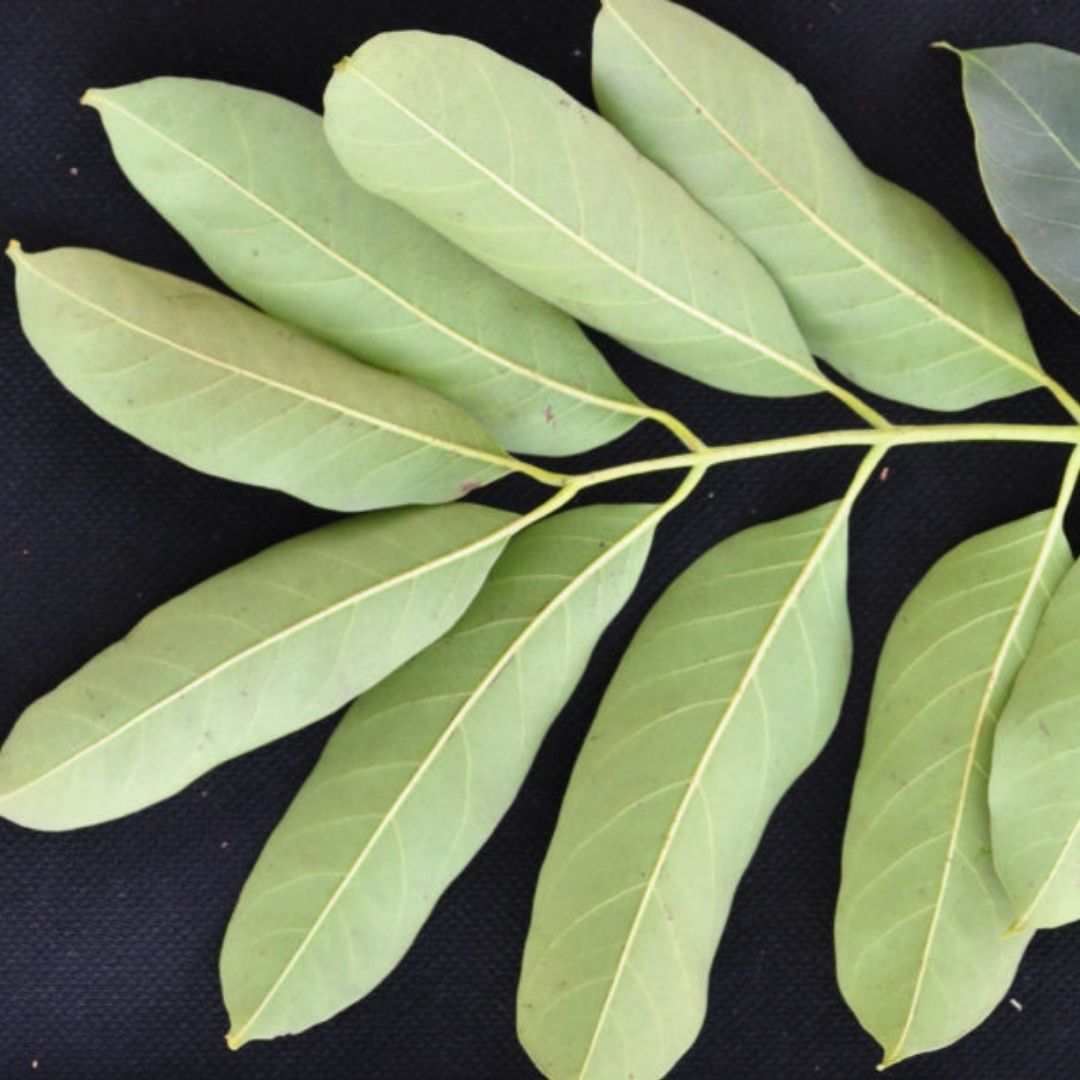
Given room and time this is one of the most imposing trees you can plant. A straight buttressed trunk carries a wide, densely branched crown of glossy compound leaves, and the new growth flushes a startling coppery red. Sprays of small cream flowers appear towards the end of the year, sweetly scented, drawing bees and butterflies.
The fruit is the detail people remember. A hard woody capsule splits into four or five stiff valves, opening like a carved wooden flower, and releases papery winged seeds that spin away on the wind.
Its timber is why the world knows it. True African mahogany is rich red-brown, stable, easy to work and naturally resistant to borers, termites and fungal decay, and it has gone into furniture, panelling, doors, boats and veneer for well over a century. Export volumes have been enormous. The species is now listed as Vulnerable on the IUCN Red List, and the largest surviving specimens are mostly inside protected forest. The best known of them stands in Chirinda Forest in Zimbabwe and is among the tallest trees in southern Africa.
The bark is bitter, quinine-like on the tongue, and has a long history as a remedy for colds and fever across its range. Oil pressed from the seed is used on the scalp.
Plant it in full sun, in a warm frost-free position with shelter from strong wind while young. Water generously while it establishes and through dry spells, since it has moderate drought tolerance at best and grows fast enough to justify the input. Prune young trees to a single upright main stem, cutting away any competing shoots that try to form a second top, because a forked tree carrying a crown this heavy will split in a storm. Watch the soft new growth at the branch tips for the mahogany shoot borer, whose larvae tunnel in and kill the leading shoot, and cut out and destroy affected tips as soon as you spot them. Give it a park, a campus, a farm or a large open garden rather than a suburban plot, since the buttress roots and eventual size need real space. Use it as a large-scale windbreak in warm frost-free areas, where its speed and dense evergreen crown do the job well.
We plant East African Mahogany in Malawi as part of our Mulanje Landscape Restoration Project. It is one of our larger canopy species, a long-term investment in the forest's future structure rather than a quick-establishing pioneer. Given room and time, it grows into one of the most substantial trees in the landscape, its buttressed trunk and dense crown eventually forming part of the mature forest canopy that faster-growing pioneer species are planted to prepare the way for. As a species listed as Vulnerable on the IUCN Red List, planting it here also contributes directly to the conservation of a tree under pressure elsewhere in its range.
A Tree Card funds real tree planting in one of Greenpop's restoration projects. Browse our full range of designs, for any occasion, and find the right one for you.