.jpg)
.jpg)
.jpg)
.jpg)
.jpg)
In August the Keurboom stops being a pleasant grey-green background tree and becomes the reason people pull over. Sprays of pink to mauve pea flowers cover the entire canopy for weeks, sweetly scented and loud with carpenter bees. Those bees are the tree's main pollinators, because they are the only insects strong enough to force the flowers open. Honeybees, sunbirds and smaller insects work the edges. The foliage is soft, feathery and silver-tinged, and flat brown pods follow the flowers.
What makes this tree important is how it lives. It is a pioneer. It germinates readily on burnt or cleared ground, shoots up before anything else gets going, fixes nitrogen into depleted soil through its roots, and casts the light shade that slower forest species need in order to establish. Then it dies, usually inside two decades, and hands over the space.
For anyone restoring degraded land in the Cape, that short life is a feature rather than a flaw. Plant Keurbooms as the nurse crop and plan the succession from the start.
The Keurbooms River near Plettenberg Bay is named for these trees, which says something about how thickly they once grew along it. The soft timber has never been much use beyond firewood and rough work.
Plant it in full sun on free-draining ground. Water it through the first two summers and then leave it, since it becomes reasonably drought tolerant once established, though never as tough as a Wild Olive or a Taaibos. Prune it to a single strong stem while young, because a multi-stemmed Keurboom in a gale is a liability, and stake young trees on exposed sites. Use it for instant screening, quick shade, or as a nurse crop alongside slower species such as Cape Beech or White Pear. Avoid it in an exposed windy position, and avoid it entirely if you want permanence. Plan what replaces it before you plant it, because in fifteen years you will need to.
We plant Keurboom as a nurse crop across Mistbelt, Heartland, the Garden Route Botanical Garden Forest Plot, and Khoinania, using its rapid growth and nitrogen-fixing roots to stabilise degraded or cleared ground and cast the light shade slower-growing indigenous species need to establish. It's a deliberate, short-term investment: within a decade or two the Keurbooms die back naturally, having already done their job of preparing the soil and canopy conditions for the climax species planted alongside them.
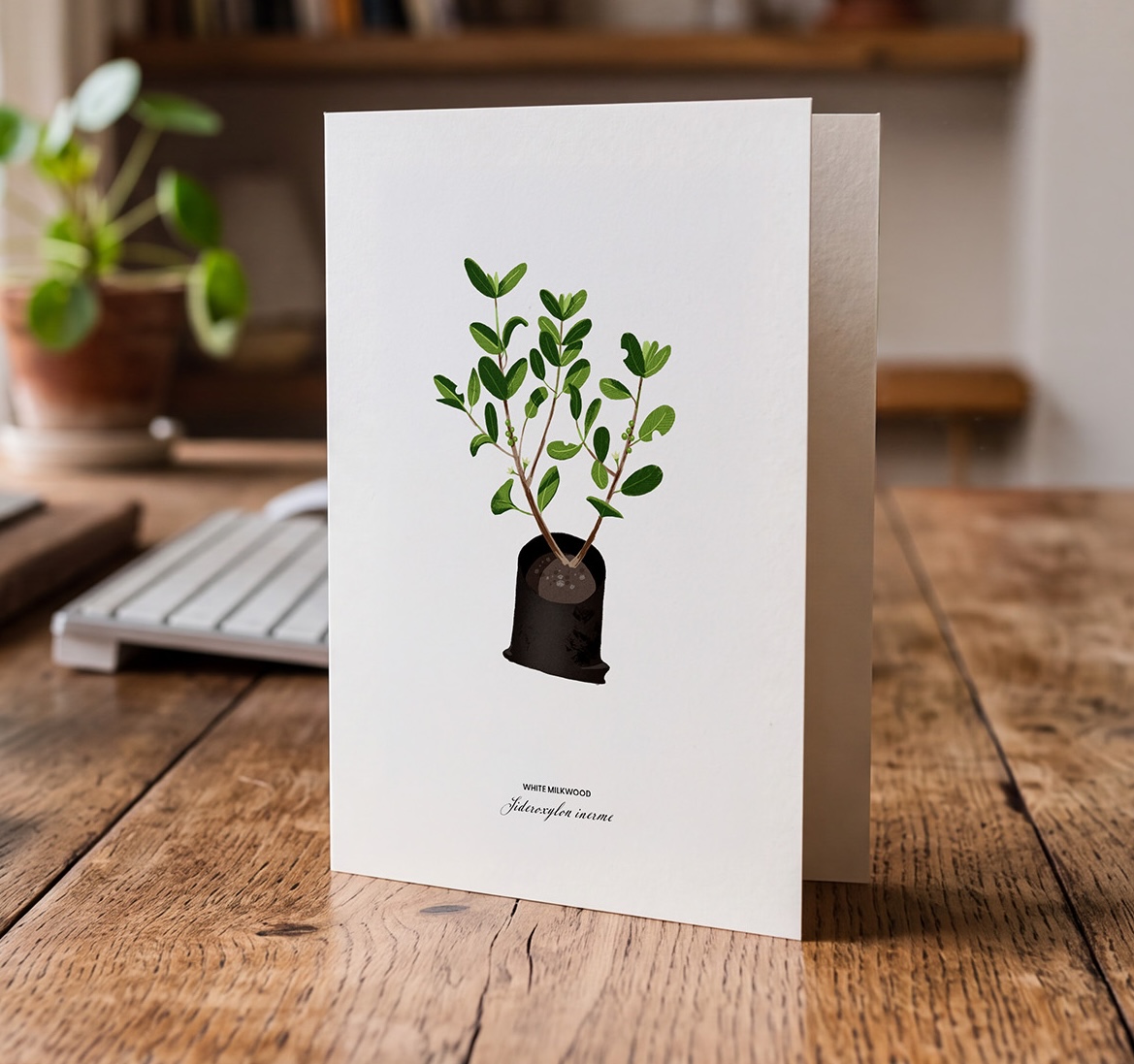
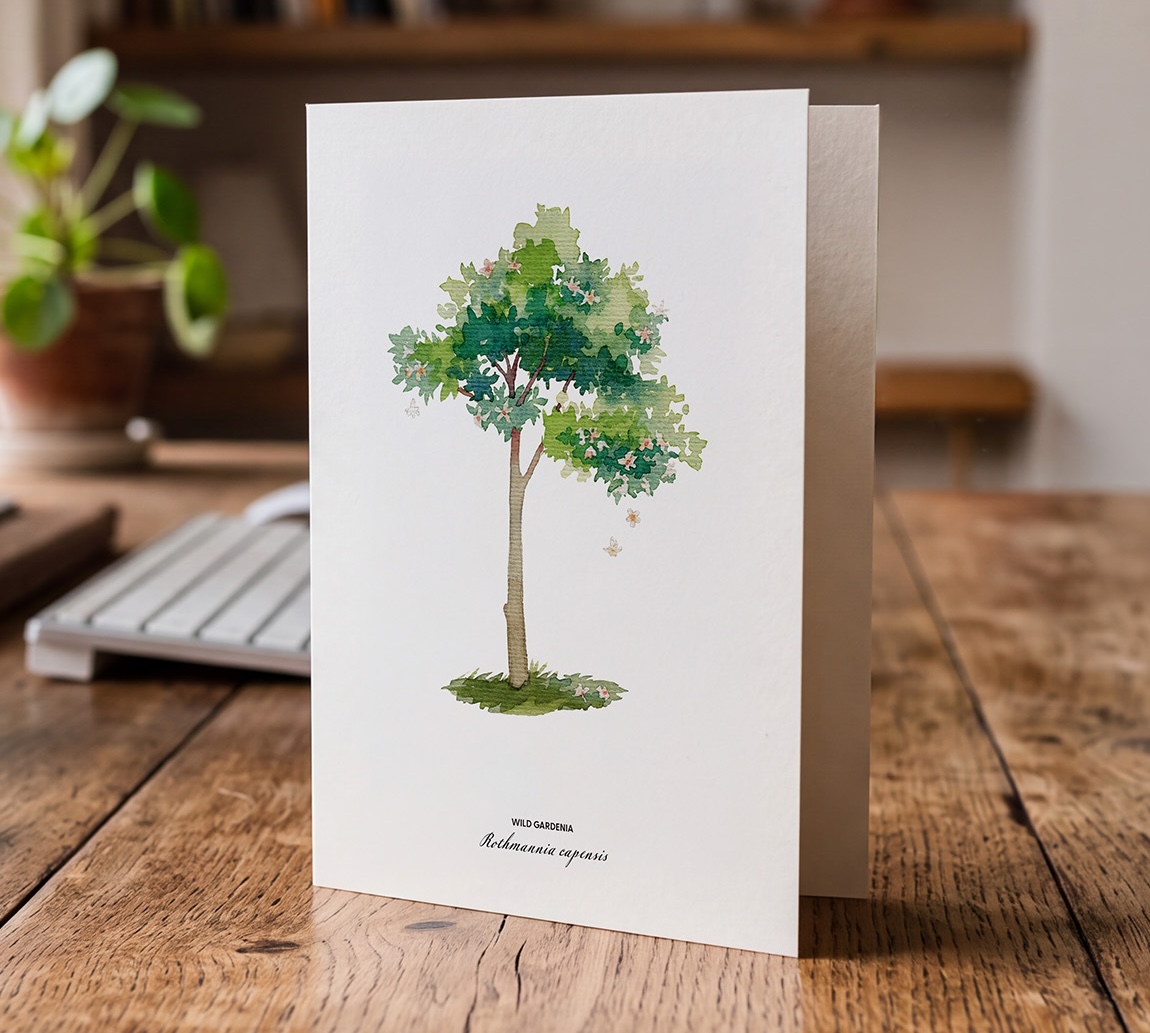
A Tree Card funds real tree planting in one of Greenpop's restoration projects. Browse our full range of designs, for any occasion, and find the right one for you.