.jpg)
.jpg)
.jpg)
.jpg)
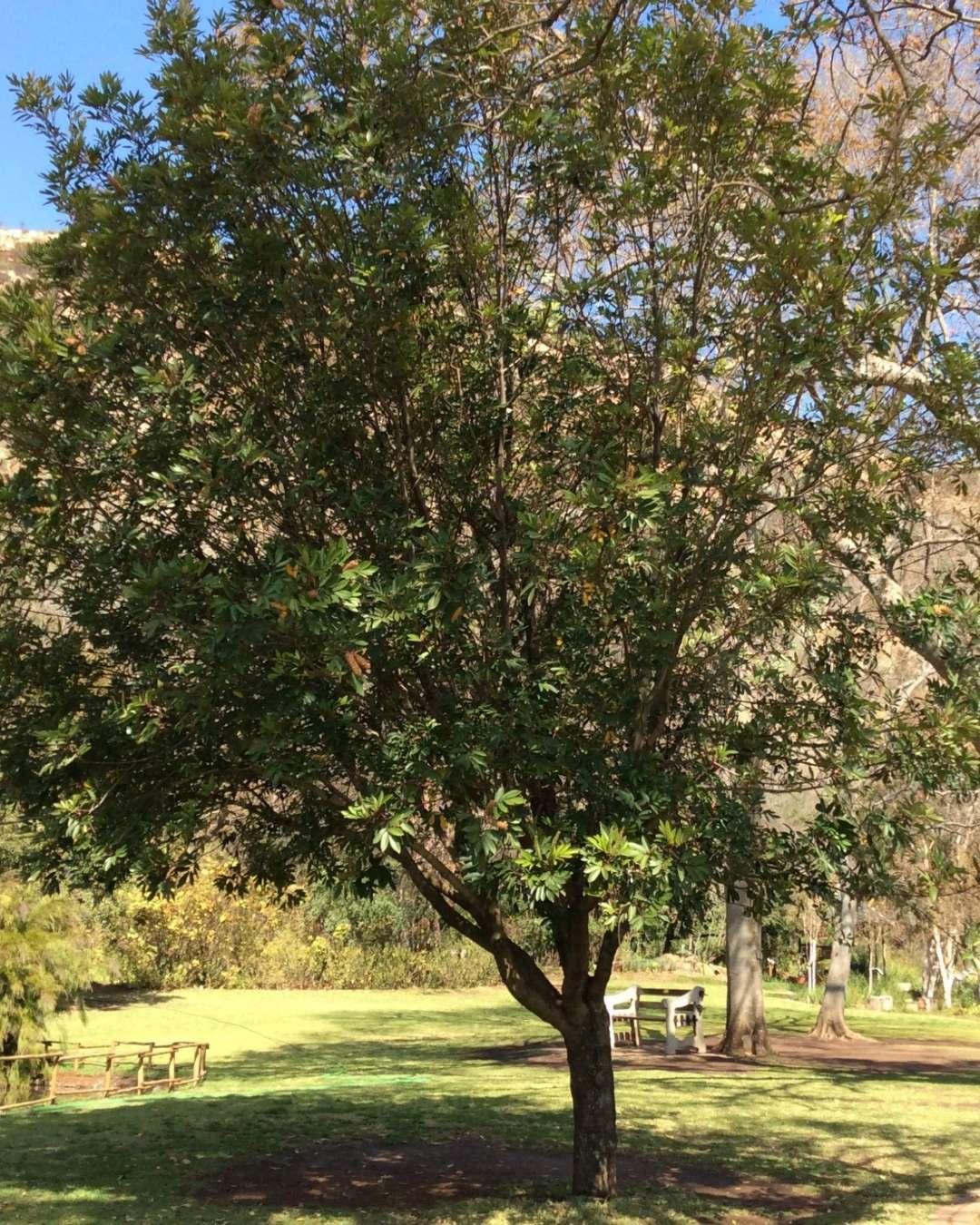
The name comes from a detail most people walk straight past. At the tip of each branch the growing bud sits enclosed between two pale spoon-shaped stipules, pressed together face to face like a small butter spoon. Peel them apart and the new leaves are inside, flushing red and copper. That red runs through the whole tree, in the leaf stalks and the new growth, set against glossy toothed compound leaves.
The flowering is the other reason to plant it. From February to May, when most gardens have run out of things to offer, Red Alder throws up dense creamy-white bottlebrush spikes, honey-scented and thick with bees, beetles and flies. For late-season nectar in the Cape there is very little to match it.
Rusty-brown capsules follow, each one tipped with two small horns, and they hold on the tree for months. The seed inside is fine and sticky, and it travels twice over. First on the feathers and bills of visiting birds, then on the wind.
There is a good story in the botany. Cunonia capensis is the only member of its genus outside New Caledonia, where the other two dozen species all live. The split is a leftover from the days when both places were part of Gondwana. Closer to home, the pinkish-red timber is fine, even and pleasant to work, and it was a favourite of Cape furniture makers and wagon builders, who knew it as rooiels. The bark has a minor recorded use in traditional medicine, described in the older literature as a treatment for “nervous complaints”,like anxiety or sleeplessness.
Plant it in semi-shade or full sun, somewhere the roots stay cool, so beneath larger trees or on the shaded side of a house. Water it reliably, particularly through the first few years when it needs the most, and expect poor results in hot dry conditions. Work compost into the soil at planting and mulch annually. Prune it cleanly and as hard as you like, since it takes shaping well and can be kept compact. Use it on a stream bank, in a shaded courtyard, or in any moist corner of the garden. Choose it for a smaller garden with confidence, despite the height it can reach, because the pruning tolerance and well-behaved roots make it easy to contain. Plant it in a coastal garden only where there is shelter from direct salt wind.
We plant Red Alder at Uilenkraal along stream banks and moist, shaded margins, where its need for consistent water and tolerance of wet ground make it a natural fit for the site's riparian zones. Its late-season flowering, arriving just as many other species have finished for the year, helps keep the forest's insect and bird activity going well into autumn, adding another layer of seasonal resilience to the restoration site.
A Tree Card funds real tree planting in one of Greenpop's restoration projects. Browse our full range of designs, for any occasion, and find the right one for you.