.jpg)
.jpg)
.jpg)
.jpg)
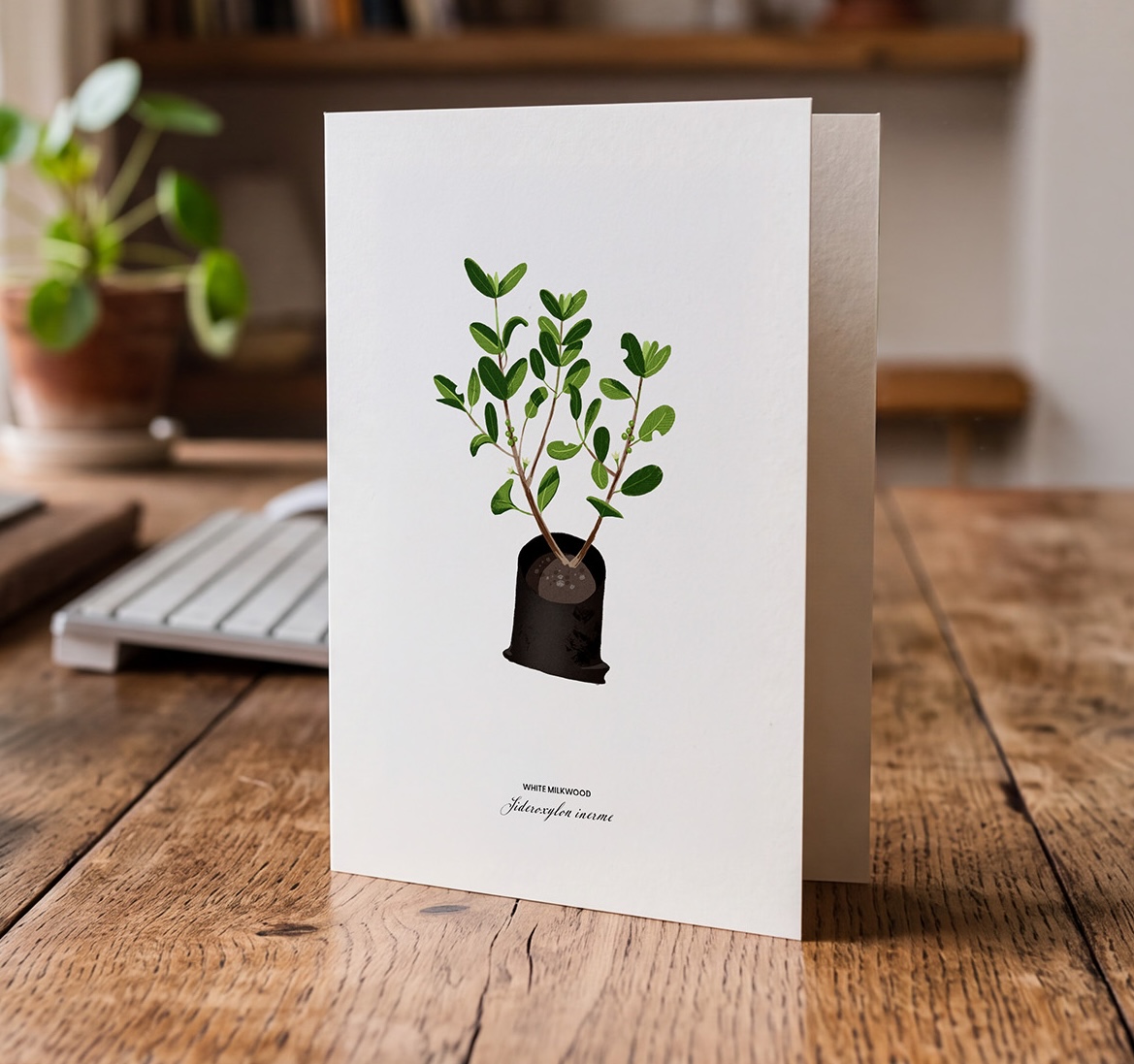
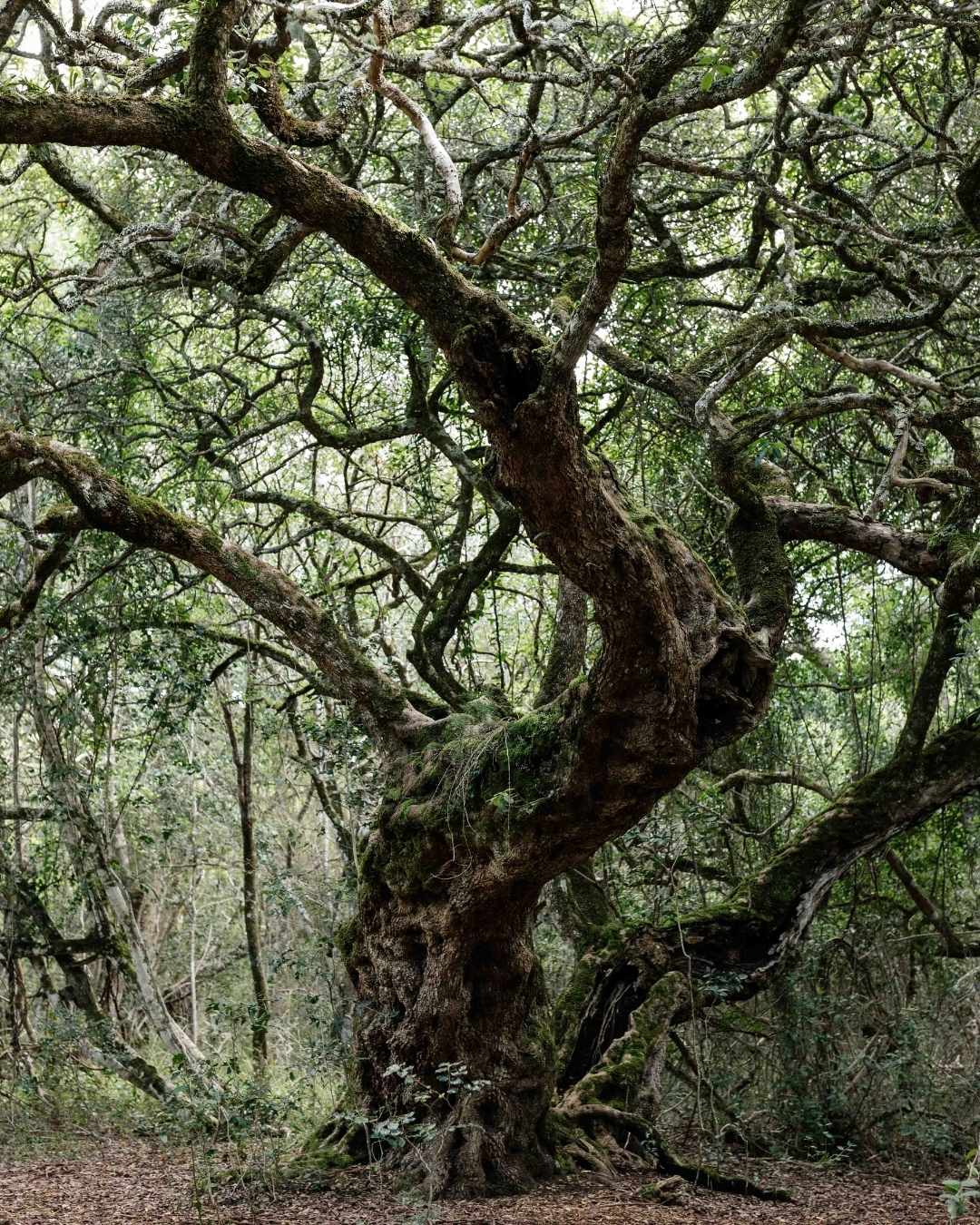
A milkwood on an exposed dune grows low and wide, with a dense dome of a crown and branches that twist into one another. The leaves are small, leathery and packed tight against the salt. Break one and it bleeds sticky white latex, which is where the name comes from.
Small greenish-cream flowers appear in spring and summer, clustered along the branches. They're not much to look at, and they smell worse, but insects work them hard. By autumn the tree is loaded with purple-black berries. Bulbuls, mousebirds, barbets, starlings and Knysna turacos feed on them; bushbuck and monkeys take what drops. In the deep shade underneath, coastal forest seedlings get their start.
White Milkwood is protected by law in South Africa — you need a licence to cut, move or damage one. A few individual trees are landmarks in their own right. The Post Office Tree at Mossel Bay has been standing since at least the early 1500s, when passing sailors left letters in a boot hung under its branches for the next ship home. The Treaty Tree in Woodstock and the Fingo Milkwood at Peddie are the other two.
The timber is heavy and hard, and awkward enough to work that it never became a furniture wood. It went into fence posts, boat ribs and wagon parts instead. Bark and roots have a long history in traditional medicine along the coast.
Plant it in full sun, in sandy rather than enriched soil. Water regularly for the first two or three years, then stop, because established trees handle drought and sea wind without help. Skip the pruning and skip the feeding, neither of which will make it grow faster. Avoid low-lying spots that hold water after rain. Keep it within reach of the coast if you can, since frost is the limiting factor. Use it as a windbreak or a shade tree in a seaside garden, where its salt tolerance is hard to match. Allow for the spread rather than the height, because it needs room sideways more than up, and plant it for the next generation rather than this one.
We plant White Milkwood at Uilenkraal for the very long term, this is one of the slowest-growing species in our restoration mix, planted knowing it may take generations rather than years to reach real size. We don't have to imagine what that looks like: the old-growth Platbos forest, part of the Uilenkraal project itself, is home to a White Milkwood believed to be over 1,000 years old, a living reminder of exactly what these trees can become given enough time. Its dense, salt-tolerant canopy makes it especially valuable on the site's more exposed, coastal-facing ground, where fewer species can establish at all, and the deep shade it eventually casts gives coastal forest seedlings a place to get started underneath it. As a legally protected species, planting it here also adds to a population already valued and safeguarded across South Africa.
A Tree Card funds real tree planting in one of Greenpop's restoration projects. Browse our full range of designs, for any occasion, and find the right one for you.