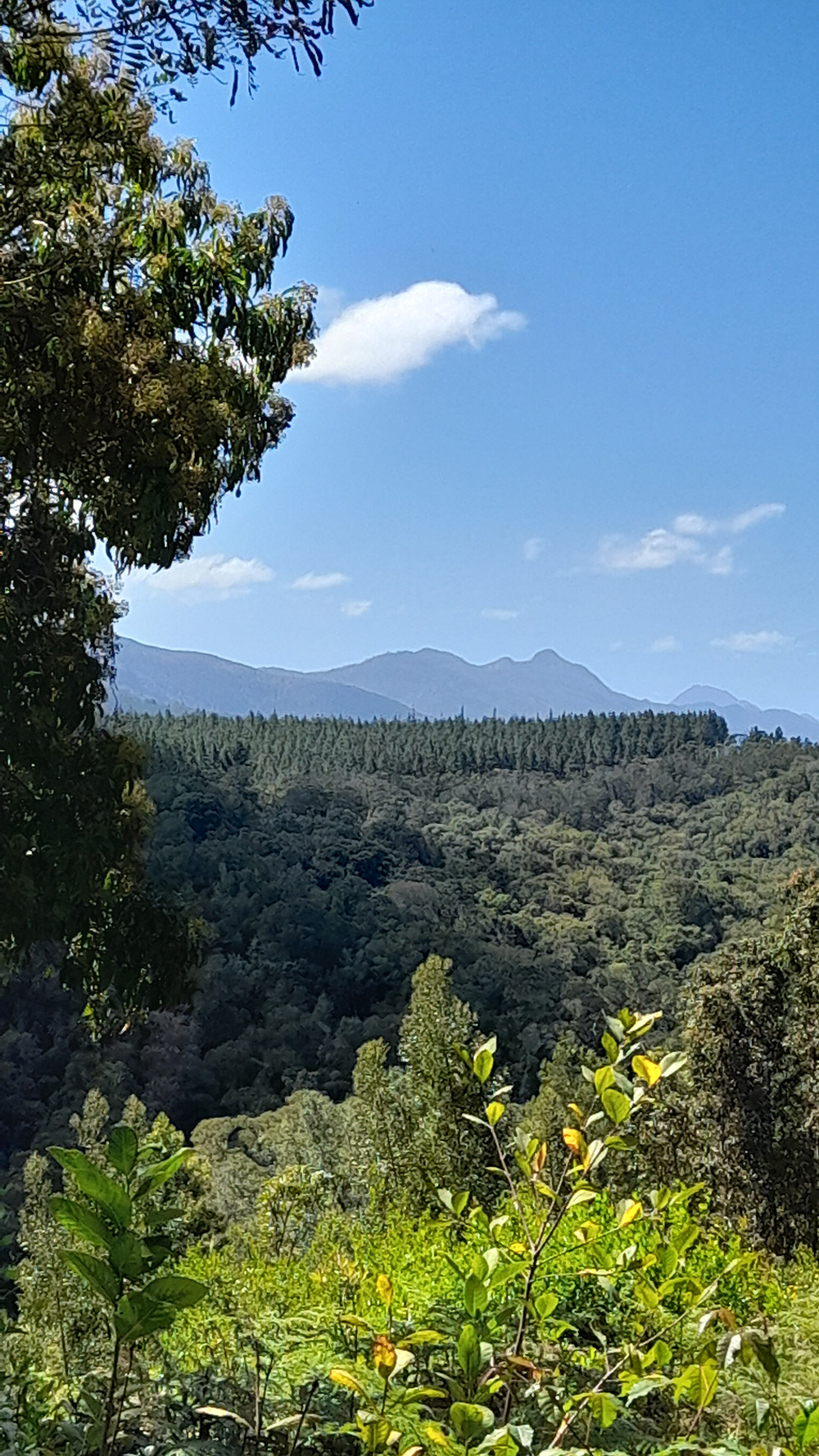
Forests provide vital services to both people and the planet, acting as a crucial source of food, medicine, and fuel for more than one billion people globally. They hold more than three-quarters of the world's terrestrial biodiversity, protect soil and water, and are essential for socio-economic development.
In spite of this immense value, in Sub-Saharan Africa, forest cover is decreasing at an alarming rate due to unregulated logging, clearing for cash crops, and overuse of trees for fuel. This makes vast, high-biodiversity ecosystems, including Afromontane forests and key woodlands, vulnerable to fragmentation and degradation.
Malawi, one of our key project countries, illustrates this trend clearly.
Key statistics about forests in Malawi sourced from Global Nature Watch. Information – including rates of forest change, forest extent, drivers of deforestation, and deforestation and fire alerts – can be customized, easily shared and downloaded for offline use, here.
Since 2011, we have worked with small-scale local organisations and provided strategic support to restore forest and woodland habitats, manage critical catchment areas, and improve the lives of communities who rely on these vital resources. Our long-term commitment to restoration has generated significant impacts across Sub-Saharan Africa.





Explore our active and past projects that make up the Forests for Life programme. Each of our projects is unique and tailored to the specific ecological and community needs of its location.
In collaboration with Platbos Conservation Trust, Bodhi Khaya, Bodhi Forest, Kleinbos Farm, and Strandkloof Farm.
In collaboration with Cape Parrot Project, a project of the Wild Bird Trust.
In collaboration with the Mulanje Mission Hospital.
In collaboration with Wild Spirit Backpackers.
In collaboration with Heartland Organic Farm.
In collaboration with Pachamama Projects NPC.
In collaboration with the Garden Route Botanical Gardens.
In collaboration with Sons of Thunder.
In collaboration with Terra Khaya Backpackers.
In collaboration with Featherbed Nature Reserve.
In collaboration with the University of York.
Our Forests for Life programme is designed to ensure our on-the-ground projects contribute directly to regional and international conservation commitments. By focusing on quality and long-term permanence, we deliver verifiable results against key global mandates.

Our work directly supports AFR100's target of bringing 100 million hectares of land into restoration by 2030, Africa's regional contribution to the global Bonn Challenge, which aims to restore 350 million hectares worldwide.
South Africa's National Biodiversity Strategy and Action Plan (NBSAP) sets a national target of protecting 21% of land and freshwater ecosystems by 2035, naming NGOs as essential co-implementers alongside government.
We report all trees planted through our restoration projects to the Department of Forestry, Fisheries and the Environment, contributing directly toward South Africa's national tree-planting target.

Malawi has committed to restoring 4.5 million hectares of degraded land by 2030, as part of its national strategy and its pledge to AFR100 and the Bonn Challenge. Our Mulanje project contributes directly to this national goal.
Global goals often call for the planting of millions of trees. However, we firmly believe it is time to move beyond simply counting trees and shift the focus to making every tree count. We ensure the long-term success of our work by adhering to six core principles across every restoration project we lead.
Setting objectives aligned with long-term ecological and community resilience — rather than just chasing a number of trees in the ground.
Read moreSelecting the most effective mix of interventions for each unique landscape — and not assuming that planting a tree is always the only answer.
Read moreFocusing on degraded forests, villages, and agricultural land — and never encroaching on vital natural ecosystems like grasslands or fynbos.
Read morePrioritising a diverse mix of locally indigenous species — and avoiding the "green deserts" of monocultures or invasive trees.
Read morePartnering with local organisations, communities, and scientific experts — and never assuming we have all the answers from the outside.
Read moreMeasuring success through long-term ecological and socio-economic health — and not just packing up the spades and hoping for the best.
Read moreForest restoration is a complex, multi-disciplinary journey. To ensure we set ambitious yet appropriate goals for every unique ecosystem, we utilise the Road to Restoration (FAO and WRI, 2019) framework.
This globally recognised tool provides a structured process for setting priorities and establishing systems to track progress. By moving through this framework, we answer the hard questions before a single tree is planted:
What are the primary drivers of degradation in this landscape (logging, agriculture, fuel demand, etc) and what outcome are we restoring toward?
Who are the stakeholders, from local communities to conservation partners, and how will each one benefit from restoration succeeding?
What are the potential barriers (social, financial, or ecological) that we need to overcome to make this restoration last?
How do we define success 5, 10, or 20 years from now, and what will we be measuring at each of those milestones?
Our goal-setting isn't just internal; it's part of a global movement. Read more about the Road to Restoration Framework at wri.org.
Within our restoration projects, we see planting trees as just one tool in our toolbox — not the ultimate goal. We recognise that no single intervention can restore complex ecosystems. To ensure sustainable, long-term success, we move beyond only planting trees and select the most appropriate tools for each project context.
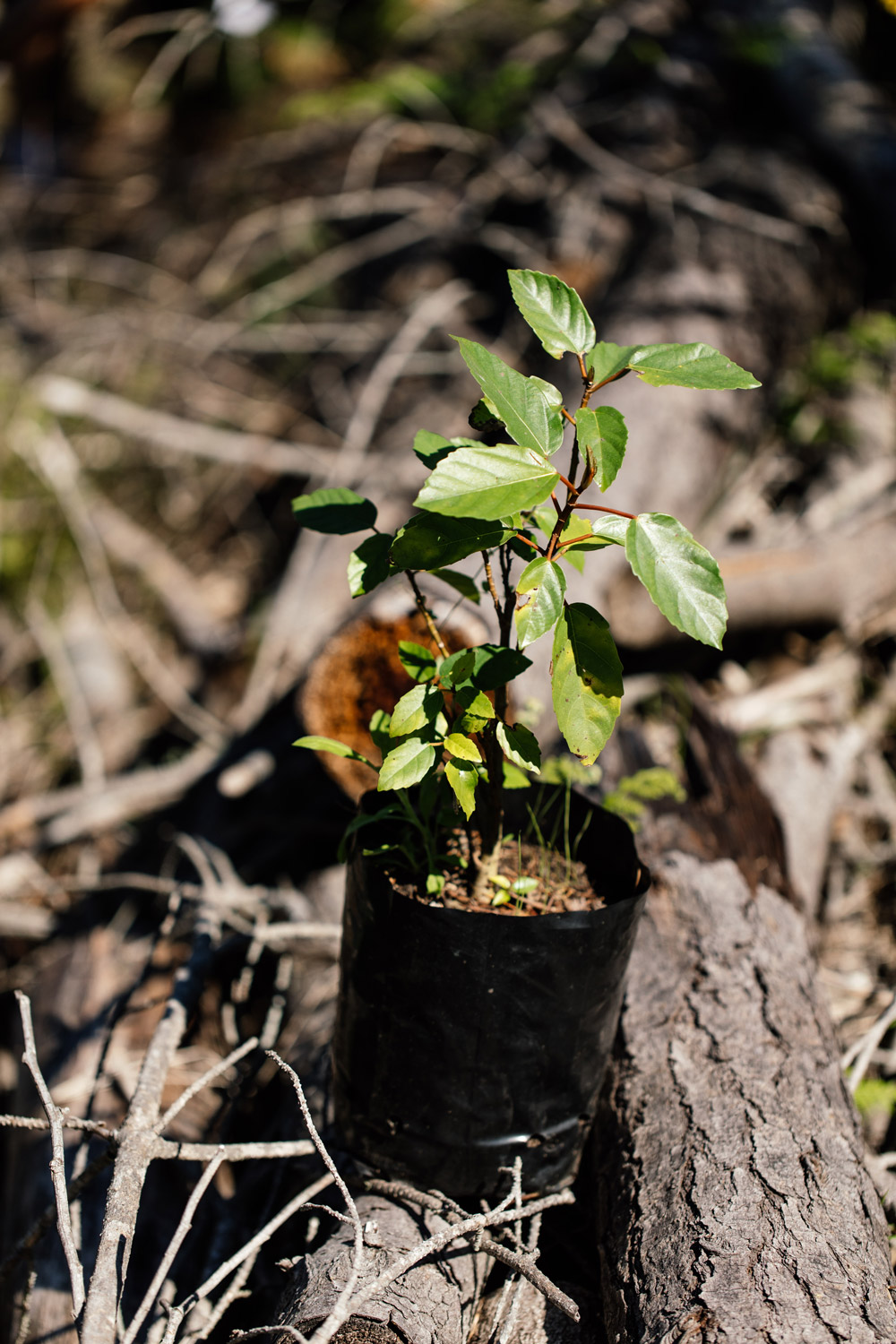
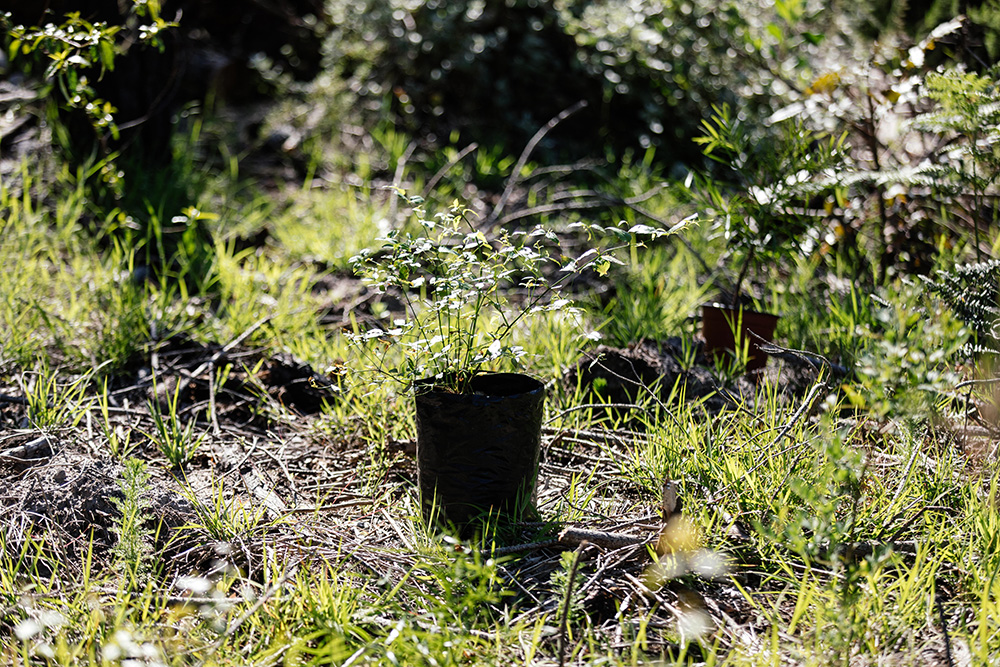
Planting a diverse palette of native tree species to jumpstart forest recovery where natural seed sources have been lost.

Fencing, weed control, and protection of naturally sprouting trees to aid nature's own recovery process, often at lower cost than active planting.

Removing non-native, "thirsty" species that deplete water tables, increase wildfire risk, and crowd out native life.

Firebreaks, controlled burns, and fire-wise community training to protect vulnerable growing zones from the risk of runaway fires.
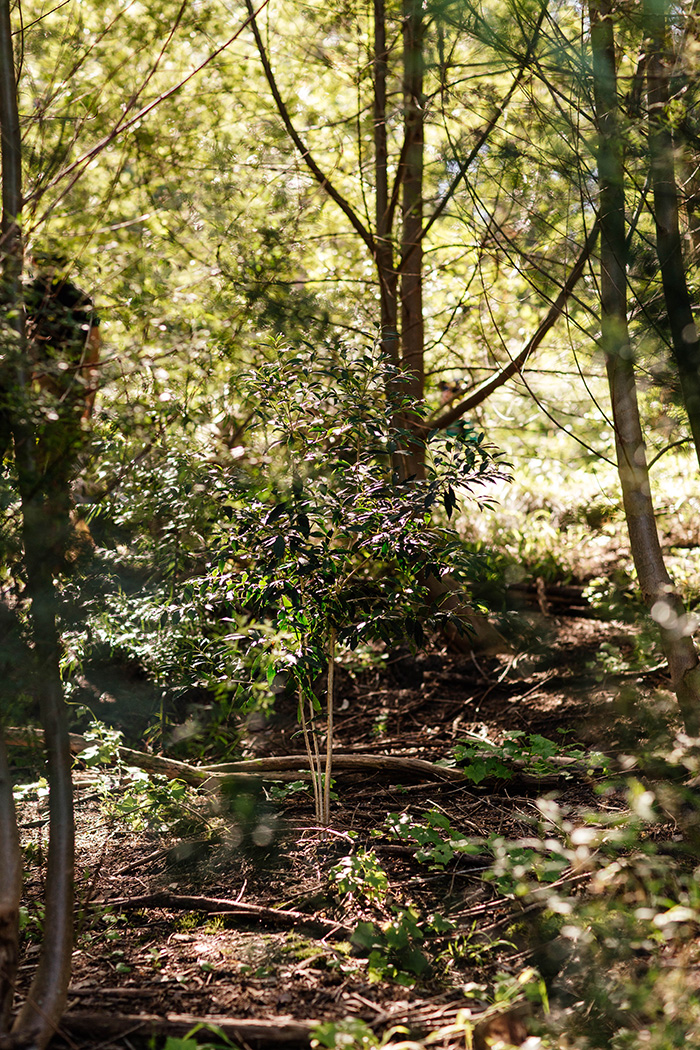
Planting successional tree species and understorey flora alongside canopy trees, rebuilding a complete plant community, not just the tree layer.
Swales, contouring, and brush-packing to secure soil, reduce run-off, and protect water quality in vital watersheds.
Our project sites are selected through rigorous ecological assessments. We adhere strictly to the principle of Bioregionalism, the practice of restoring land based on its natural ecological boundaries rather than political ones.
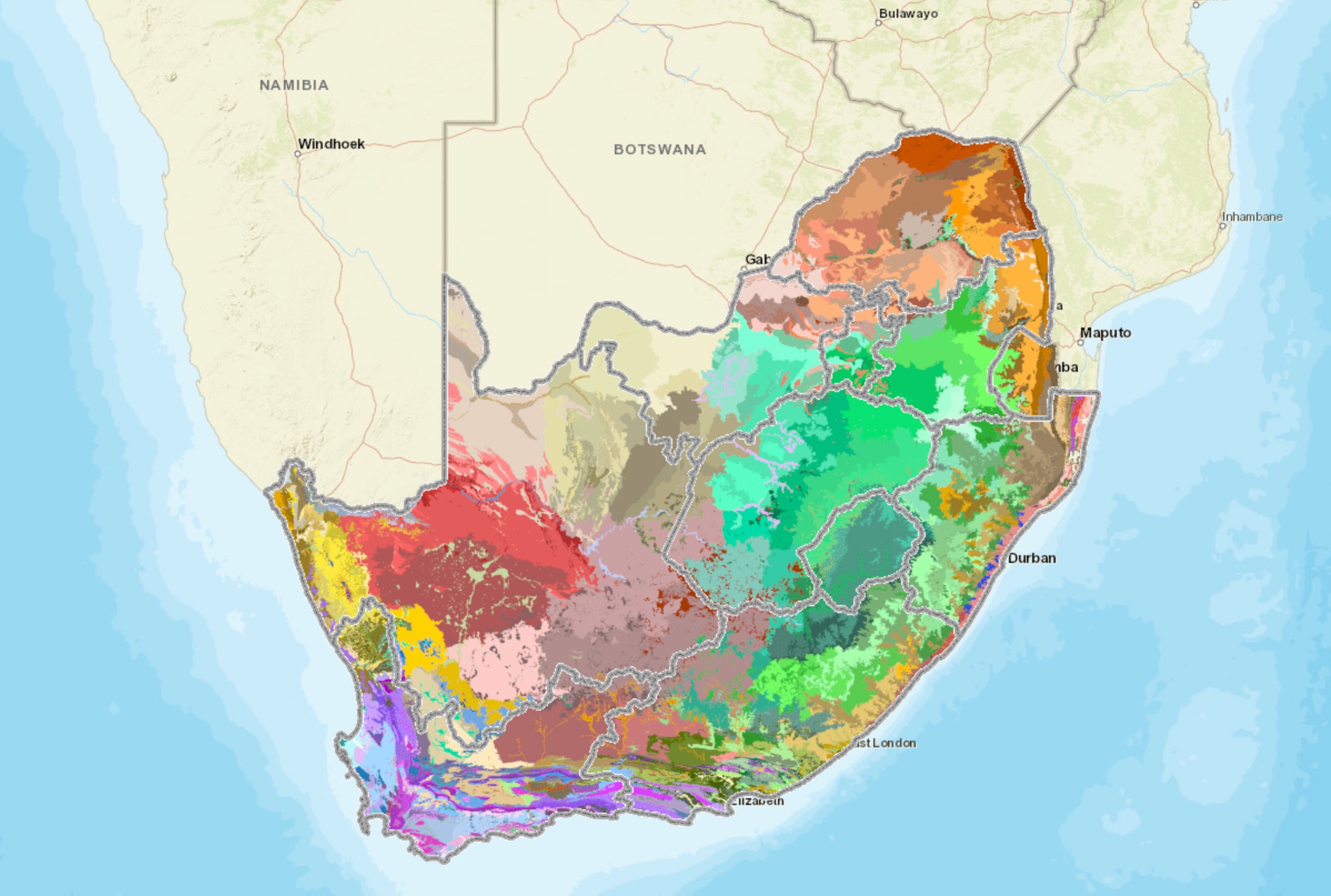
To ensure we are working in the right place, we consult the relevant national and regional vegetation maps for each project country. In South Africa, for example, we use the SANBI VegMap (pictured) to identify historically forested areas and distinguish them from distinct, non-forest biomes, and we apply the equivalent national vegetation data in each of the other countries where we work.
We recognise that forests, fynbos, and grasslands are distinct ecosystems. As such, we do not plant trees in natural, healthy fynbos or grassland biomes, as these are carbon-rich and biodiverse in their own right. Instead, we focus on restoring degraded indigenous forest patches, riparian zones, and critical catchments, where trees are the historically appropriate land cover.
The single most critical factor in successful restoration is using the correct genetic material. Our restoration planting prioritises locally indigenous, non-invasive species that are resilient to local climate conditions and have a high chance of survival, complemented by carefully selected species that provide shade, food, and other direct benefits to the villages and communities we work alongside.
We don't plant "green deserts", monoculture plantations that look green from a distance but support little biodiversity and add little ecological value. Instead, we build resilient, multi-layered ecosystems by selecting a wide palette of species that belong in each specific landscape.
At our restoration sites, we combine pioneer species that establish quick cover with climax species built for long-term stability, sourcing seeds and saplings from local forests so they're well adapted to each site's conditions.
Where appropriate, we integrate traditional agroforestry or syntropic agroforestry systems, combining trees with crops or livestock to restore soil health and support local food security.
Alongside our restoration sites, we plant shade and food-bearing trees directly in the villages we work with, delivering everyday benefits like cooling, shade, and fresh produce.
To ensure long-term success and sustainability, all Forests for Life projects are developed and implemented in collaboration with on-the-ground partner organisations, ensuring local knowledge leads every intervention and building lasting capacity through knowledge-sharing across diverse contexts.
Beyond these partnerships, we deploy what we call our Social Toolbox: three ways we address the human drivers of deforestation, so the forest stays protected for generations to come.
Training in beekeeping, agroforestry, and alternative cookstoves to create new income streams while reducing pressure on forest resources.

Engaging local schools and community members in hands-on stewardship to foster a generation of forest guardians.

Working with partners and local authorities to strengthen community-led governance and local forest regulations.
Our comprehensive Monitoring, Evaluation, Reporting, and Learning (MERL) methodology ensures the effectiveness of our actions is regularly verified through holistic and reliable measurement.
We don't just count trees; we align our approach with the four core principles of scientific reforestation best practice (Permanence, Ecological, Social, and Financial) and measure change across ten indicators: Biodiversity, Water, Soil, Climate, Community, Culture, Energy, Economy, Food, and Products.

We map and track our restoration progress on Explorer.land, giving anyone the ability to view our live project data and spatial maps.

Our sites are mapped on Restor, a global platform connecting restoration projects with the science and data behind ecosystem recovery.

Greenpop is rated in the Mongabay Global Reforestation Directory. Our current scores: 92 for Permanence, 100 for Ecological, 75 for Social, and 100 for Financial.
Forests for Life is powered by people who believe in a healthier future. Choose your path to making a difference:

Partner with us to meet your ESG and Nature-based Solution targets through verified, high-impact projects.
Purchase a Tree Card, for yourself or for someone else, and fund the planting of trees in our projects.

Join us at our flagship event where community, music, and planting come together to celebrate our forests.