

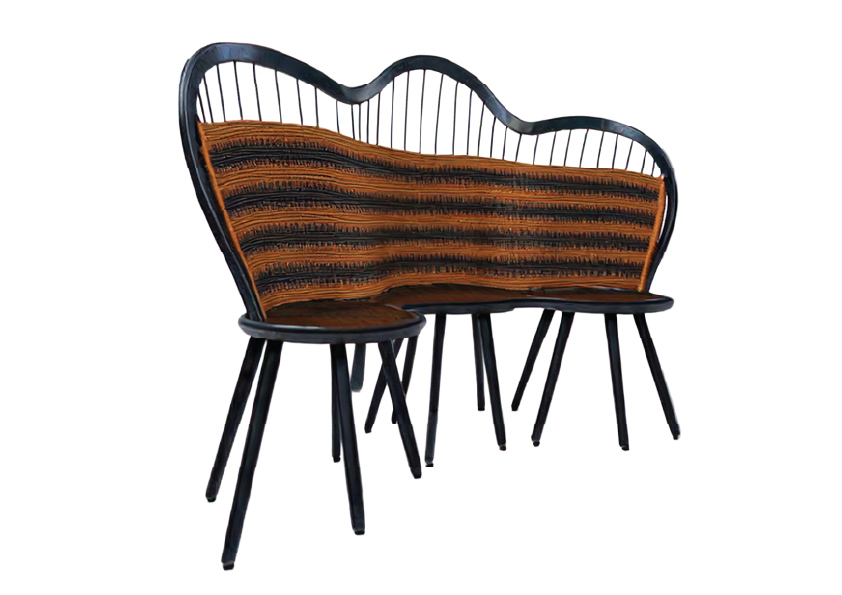
The Hlabisa Bench is a groundbreaking, internationally acclaimed piece that represents the absolute zenith of modern South African design. Seamlessly marrying 21st-century technology with centuries-old African craftsmanship, this highly coveted bench is a physical manifestation of cross-cultural storytelling, hospitality, and artistic innovation.
Originally debuted at the Revelations Fine Craft and Creation Fair in Paris, the bench has permanently shifted how South African design is viewed on the global stage. This specific piece is the third production of the Hlabisa Bench; notably, the second production was acquired by the world-renowned Musée National d’Art Moderne, Centre Pompidou in Paris for its permanent collection, marking the first-ever South African object to enter the museum's prestigious Design section.
As Oliver Zeitoun, Curator at the Centre Pompidou, notes on their acquisition of the series: "It is the first South African object to enter the Design section of the Centre Pompidou, of great importance for the museum’s collections because of its collaborative and interdisciplinary approach, at the crossroads of craft and design, local traditions and recent technologies."
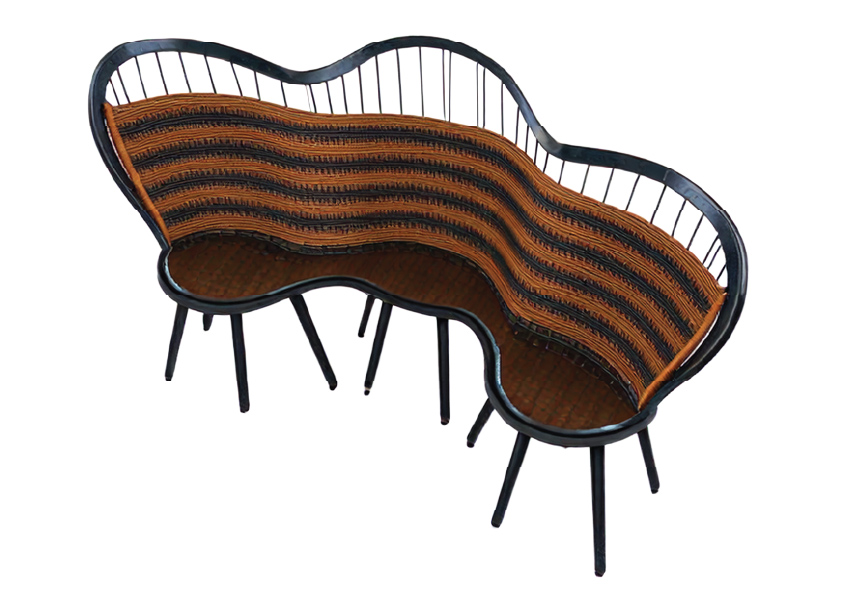
Conceived not simply as a piece of furniture, but as a deliberate, collaborative exploration of different South African histories, the bench merges the high-precision, minimalist woodwork of Houtlander with the narrative-driven, tactile aesthetic of Mash.T Design Studio. By combining these evocative storytelling perspectives, the studios created a new, inclusive South African narrative that respects individual heritage while building something collectively groundbreaking. At the heart of the form is a celebration of home and shared spaces; the undulating silhouette, conceived by Thabisa Mjo, is inspired by the rolling hills of KwaZulu-Natal and the shape of a traditional three-legged cast-iron pot used by her grandmother — a staple in South African homes and a symbol of hospitality, warmth, and coming together.
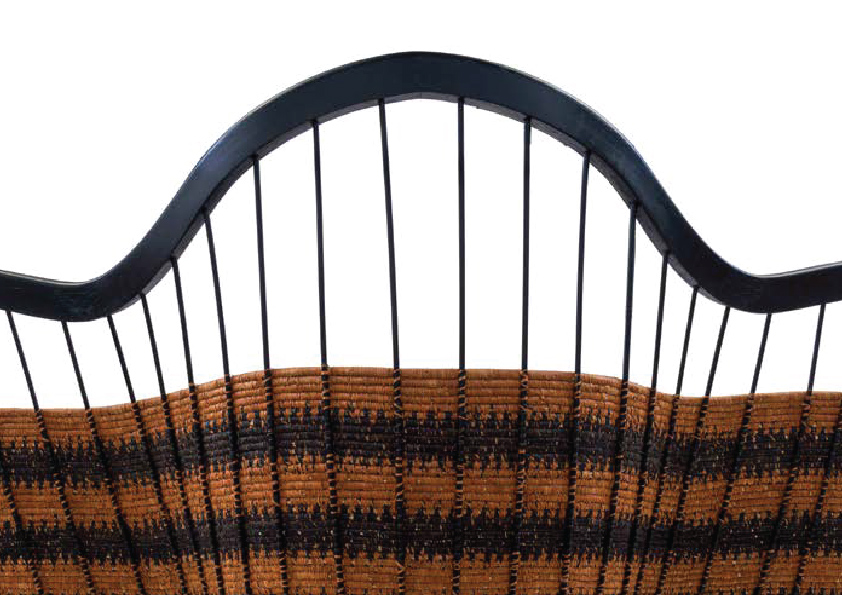
The physical structure represents a perfect juncture where technology and craft shake hands. The fluid, organic curves of the frame were perfected using advanced 3D modelling and constructed using high-precision timber craftsmanship. This highly engineered oak frame then becomes the canvas for a striking backrest, created by the absolute masters of the traditional Zulu basket-weaving craft in the remote area of Hlabisa. This dynamic, evolving craft brings a living heritage to the piece, showcasing a side of design that goes far beyond typical aesthetics. Because each master weaver possesses their own signature style, technique, and tension, the hand-woven backrest carries a distinct "human footprint." These subtle variations do not diminish the piece; instead, they serve as a physical mark of the artisans, adding immense character, charm, and narrative depth to a work of true international pedigree.
Upcoming Editorial Coverage: Following the Gala, this historic design collection will be featured digitally in both VISI and SA Homeowner. These dedicated editorial pieces will explore the design process, philosophy, and environmental stewardship behind the creation of these three singular seats, cementing their place within the narrative of contemporary African design.


.avif)